
How To House Hack In Seattle
- Episode
- 88
- Published
- Duration
- 21 min
- Host
- Christian Nossum
- Topics
- Market Updates
Something in this episode hit home? Book a free strategy session →
Not sure where to begin?
Start with our curated buyers and investors playlists for the episodes that make the most sense first.
View our “Start Here” PlaylistsShow notes
Welcome back for another episode of Awesome in Seattle, brought to you by the Awesome Nossum Group at Wilson Realty. This week, we are revisiting a topic near and dear to our hearts - house hacking! Whether you're renting a room, or building a backyard cottage, house hacking is a great way to own a home while keeping your monthly costs low.
Read full transcript
Christian: [0:07] Hello, hello, and welcome to another episode of the Awesome in Seattle podcast. This is your host Christian Awesome, of the Awesome Nossum group at Wilson Realty Exchange, Inc. And I'm joined today by the one, the only, Ms. Reed Watson.
Reed: [0:19] Watson, that's me.
Christian: [0:21] Thank you for joining me. Today, we are talking about one of my favorite subjects, I think it's one of yours as well.
Reed: [0:29] Absolutely.
Christian: [0:29] It's one that I have employed myself numerous times. Um, we're gonna talk about house hacking, and there's a lot of different ways to house hack. We're gonna revisit some of these. We did one of these episodes years ago.
Reed: [0:41] Yeah, very- one of
Christian: [0:41] our very first One of our… Yeah, one of our first. We've done 80 plus episodes at this point, and it was within the first five probably because it was such a fun topic to do even back then. But we're gonna revisit it, we're gonna update it, we're gonna give some new tips on what you can do. So, um, let's get in. So what exactly is house hacking? So house hacking is basically where you somehow reduce your monthly mortgage payment by renting out space within your property.
Reed: [1:08] Oh, okay. So you don't hack into the mortgage website.
Christian: [1:11] I mean, that'd be called fraud.
Reed: [1:13] Sure. But it's also hacking.
Christian: [1:16] That would be a different form of hacking. Yeah. Yes. We're not doing that, we're not recommending that at all. Don't do that. What we are talking about is a way that you can potentially increase your monthly income by renting out spaces within your home.
Reed: [1:30] So there are a lot of different ways that you can enact this on your property, in your home, and I'm just gonna go down the list from kind of the very least com- co- quote, unquote "comfortable"-
Christian: [1:40] Yes … Reed: uh, ways to do it, to the most. Mm-hmm.
Reed: [1:42] So least comfortable, have a property and live on a trailer on it and rent out the whole house.
Christian: [1:48] Like McDreamy style.
Reed: [1:49] Yeah. Um, you- Get the whole house rent, put it towards your mortgage. You, again, would be living in a trailer- Yeah … McDreamy style.
Christian: [1:55] Yeah.
Reed: [1:56] Uh, second most comfortable is you can have roommates. Mm-hmm. So you can be in a condo or a home and, kind of college style, have one room that you rent out to somebody, maybe you rent out multiple rooms. Could be as crazy as putting up a sheet in the living room and, you know- … that depends on just how fresh out of college you are, I think.
Christian: [2:14] Yes.
Reed: [2:14] Um- Otherwise, you could have a tenant living in another unit in your home- Mm-hmm … within the same building. So this is gonna be a mother-in-law unit, you know, above the garage. Uh, typically, it's called an ADU, an accessory dwelling unit. Mm-hmm. But that's attached to your home, so you are gonna have a shared wall or a shared, you know, ceiling/floor situation. Don't have to see them all the time, but you're gonna be in the same structure.
Christian: [2:36] Yep.
Reed: [2:37] And then most comfortable, also shocker, going to be the most expensive. Um, most comfortable is no shared walls and building a DADU or finding a property that already has a DADU. Mm-hmm. And that is a detached accessory dwelling unit, so kind of your- your backyard cottage or separate structure that is either, you know, a studio apartment anywhere up to a full-fledged home that you're renting out and living in. You could live in the DADU, you could live in the house, but either way, you're not sharing a structure with, uh, your renters.
Christian: [3:08] Yeah.
Reed: [3:08] So those are kind of your options.
Christian: [3:09] Yeah. And we have-
Reed: [3:11] Unless you have like a lakefront property and you wanna live on a boat.
Christian: [3:14] That's a good point.
Reed: [3:15] Maybe. A
Christian: [3:15] houseboat. I'm
Reed: [3:16] trying to get really creative here.
Christian: [3:17] Yeah. You could have a houseboat and- A houseboat … Reed: and a boat and a guest house DADU and we're just going off.
Reed: [3:26] Rackin' up the mortgage.
Christian: [3:27] Exactly. Yeah, no. Uh, so I have personally house hacked a ton- Yeah … in my real estate life, um, and in my regular life. I guess they're not separate. They're one and the same at this point. They really are. They really are one and the same. So the first house I ever bought was when I was 21, maybe 22. 21. I have to figure that out- Wow … have to do the math. Yeah. I was young. Uh, and the first house I bought was a duplex. It was near the University of Washington in Wallingford, so on the kinda more neighborhood-y side- Yeah of UDub. Um, and it was a nine-bedroom house, which sounds impressive, but it was really a two-bedroom upstairs apartment that was totally separate, and then a nine-bedroom main floor and basement. Mm-hmm. Um, or I guess seven-bedroom main floor and basement. So- Nine bedrooms … in total, nine bedrooms, but two totally separate units. Mm-hmm. I lived in the upstairs unit, the upstairs two-bedroom apartment, and I made money living in my own house. So not only did they- Pretty cool … yeah, not only did the rent cover the entire mortgage, but splitting all the utilities with everyone made it so it was like so cheap to live there. It was like 10 bucks a month for cable and internet and, you know, you split the utility bills, so it was just, it was just, I was making money living in my own house. It was awesome. Um, the second house I bought was another duplex. This was on North Beacon Hill. This was right before the initial light rail stations were built, um, or completed and opened. Um, and so I bought a house there. I didn't make money on that one, but my mortgage was only about 400 bucks a month after the rents from the other unit came in- Gosh which was awesome.
Reed: [5:10] Crazy.
Christian: [5:11] Yeah. And that was a time, that was like 2008, '9, '10, when the real estate market completely tanked because of the Great Recession. And as a real estate agent only making commission income, it was the only way I could survive-
Reed: [5:26] Right … ' Speaker: cause I wasn't making a lot of money. Yeah.
Christian: [5:28] No one was at that point. And having such low housing expenses helped me survive and make it through that hard time. So this is one big reason why house hacking is so important, because we are probably in a recession right now. House hacking is a great way to protect yourself from the ups and downs of income, job loss, all of those different things. Um, the next thing we did was we actually bought a vacation house in Maui. Uh, and it's a three-unit apartment, basically. Well, it's really a main house and a detached ohana, is what they call it. It's like a detached cottage. Yeah. Like a backyard cottage, except ours is in the front and the main house is in the back. The main house we split into two different units. So the downstairs is a separate two bedroom, one bath apartment. Upstairs is a three bed, two bath apartment. The two main units, or the two, I guess the downstairs and the ohana almost cover the entire mortgage on that. So we basically have a vacation house in Maui that we can go to- Pretty much for free. It's kind of awesome. Yep. Again, the powers of house hacking. It doesn't have to be your primary residence. You can do it for, uh, a vacation house as well.
Reed: [6:43] Sounds way better than a timeshare.
Christian: [6:45] Uh, yeah. Yeah, yeah, it really does. And then last, what we are doing, we got a couple things that we're gonna do. Um, we're gonna actually put, uh, another ADU, so a separate apartment, in our house. So we have kind of these guest quarters. Used to be our laundry room, which was just massive. Like, we had- Yeah … we made it an art room with a drum set and art stuff for our kids, and no one ever used it. It was just-
Reed: [7:09] Right … Speaker: kind of dead space, more storage than anything. And there's also a current one, one bedroom and one bathroom down there. So we're basically gonna convert that, add a kitchen, um, and make it a separate apartment so that if we want to rent it out, we can. Mm-hmm, yep.
Christian: [7:25] We don't have to. We probably won't that often. Right. But if we wanna throw it on Airbnb when we go to Maui, we can make some income on our house while we're not even there.
Reed: [7:34] Yeah.
Christian: [7:35] So that's kind of our thought process there. Um, and then last but not least, one thing that we're gonna go over a little bit more is the DADU, which we talked about earlier, and that we are considering. We're going back and forth. We're already going through the permit process. It's just with everything up in the air, we don't know if we're actually gonna build this or not, but we're going through the process of building a DADU at a property that we own right by U Village, um, which is a great way to house hack as well, which we just talked about.
Reed: [8:03] Absolutely. So let's chat a little bit about what the city allows when it comes to kind of your different house hacking options. So the city allows for an attached ADU and a DADU on the same property. Correct. Is that correct, Christian?
Christian: [8:16] Yes, that is correct, and you can have, the ADU can be up to 1,000 square feet. That's within your property, and then the same with the DADU. It can be up to 1,000 square feet above ground, which here is a hack to house hack. The hack. So you can actually have, um, below ground square footage that does not count towards your minimums or your max square footage for a DADU. So you could have underground, like basement square footage on a DADU, or if it's on like a hill, that underground portion- Yeah does not count towards your max square footage.
Reed: [8:51] Hacks on hacks on hacks.
Christian: [8:52] Exactly.
Reed: [8:53] That's, that's pretty cool.
Christian: [8:54] I think that should be the title- Yeah … of this episode. Hacks on hacks on hacks.
Reed: [8:57] Right. Then we obviously have the kind of more traditional, you were just talking about this, the duplex, triplex, or a fourplex. Mm-hmm. Above a fourplex you're gonna have slightly different funding and be in a different arena. But anything bel- a fourplex or below, the city allows for you can live in one unit, it'll be your primary residence- Yep … and you can rent out the other one, two, three units, which- Yeah … can be a really great way to go.
Christian: [9:19] And that is a fantastic way to get into real estate and to house hack. Absolutely. It's the least, other than a DADU, it's my next favorite way to go about it, because you don't need that big cash capital outlay to build the DADU. Um, all you're doing is you're buying an existing two, three, four unit property. You're living in one, you're renting out the others. Those people pay rent to you, and that will potentially even cover your entire mortgage, maybe, maybe not. If you don't want to be the landlord- Mm-hmm … and live on site, I, I know we're supposed to talk about this later, but I'm gonna say it now, 'cause this is when a lot of people ask, "Well, I don't wanna be- Right a landlord. I don't wanna deal with that. I don't want my tenants to know that I'm the owner." You can just have a property manager. They will never know. It does not, like affect you at all.
Reed: [10:04] Yeah, that's pretty cool, 'cause then you can just kinda live there incognito- Exactly … and have somebody else worry about it, but you still get the income, which- Yep is pretty ideal.
Christian: [10:11] Mm-hmm.
Reed: [10:12] Absolutely. Then another option that the city allows for is if you have an, a basement or maybe an unfinished attic, just a separate floor, you can turn that space in your home, you can close it off and turn that into an ADU.
Christian: [10:25] Yeah.
Reed: [10:26] If you have a large lot, there are some guidelines around this that we would be happy to go over with you if you wanted to reach out. If you have a large lot, you can put a DADU on it, just build from the ground up, or ideally from the basement up.
Christian: [10:38] Mm.
Reed: [10:39] Um, and build one of those. Townhomes are a great place to have roommates. The city has a lot of townhomes, and even more being built today. So sometimes townhomes can be great because they have, the lower level is a bedroom, then the middle level is the living space, and then you have kind of your primary suite upstairs. Yeah. So you don't have to be kind of right on top of each other. One person can live downstairs. You can share the main floor in the middle, and then you can live upstairs without hearing your roommate all the time. I
Christian: [11:06] actually had a past client who bought a three bedroom, three and a half bath townhouse. Each bedroom had its own three-quarter bathroom, so like a standup shower. Um, and then on the main floor, there was a shared bathroom, and there was one bedroom on the bottom floor. He took that one. It was the smallest room. Mm-hmm. And he's like 6'4"- Wow … but he slept in a twin size bed, 'cause that's all that would fit.
Reed: [11:30] Wow.
Christian: [11:30] So he went on the- Okay … extreme lack of comfort side of things. Right. But after, I think, 12 years, he made so much money by renting out the two other bedrooms- Yeah … that I think he paid it off, and now he's in his early 30s- Wow … and he's retired.
Reed: [11:46] Yeah, so that's lack, a tiny bit of comfort to very comfortable. Yes.
Christian: [11:51] Yes.
Reed: [11:52] How cool.
Christian: [11:52] Exactly.
Reed: [11:53] So another option, uh, as I mentioned, you can have roommates. If you own a condo, that's kind of gonna be your main option there. And you can also Airbnb portions of your home, whether it's a full on ADU, or a room, or a yurt in your backyard. Yeah. There are all sorts of things that you can do with Airbnb. So you're not just relegated to long-term tenants.
Christian: [12:13] Yep.
Reed: [12:14] Um, but let's chat a little bit about financing- Mm-hmm … house hacking. You only need to put 5% down if this home is gonna be your primary residence, even if it's a duplex, a triplex. As long as you're living in the home, you can put 5% down. Like-
Christian: [12:30] You can even do less. So you could potentially do an FHA 3.5% down loan. Absolutely. Or if you're a veteran, you can do the 0% down VA loan, which is an amazing loan, and if you are a vet and you haven't used that yet, you need to look into it. Right. Because even if you don't wanna… If, even if you wanna put money down, it's a great loan. Um-
Reed: [12:49] It is … Speaker: and if you need referrals, let us know, 'cause we have amazing VA partners that are just great at explaining all of it, and going over the pros and cons with you. Yeah. Um, it's really good to have a lender who, who really understands all the programs. Yeah,
Christian: [13:03] not every lender understands that at all, so you really need a good one.
Reed: [13:07] So yeah, if you're going conventional, you can put 5% down if it's your primary residence. Um, you must live on the property for the first year if you're going to do that- At a minimum, yep … in order to get that financing. Minimum for the first year. If you wanna buy an investment property later on, you will very likely have to put 20% down if you don't live there. So this is a great way to get an investment property while putting less cash down, is to just kind of bite the bullet and live there for the first year.
Christian: [13:33] Which I have a great story about this as well.
Reed: [13:35] Excellent.
Christian: [13:36] We have a past client, a friend of mine, where we actually bought a house together, the one near you, Village, that we talked about. Yeah,
Reed: [13:42] it's a great
Christian: [13:42] house. Um, we partnered on it with him, and he lived in it. So we bought it with 5% down. He lived in it for a year. Uh, now we rent it out to… He moved out. Um, we rent that out long-term, and he actually bought another house where he finished off the basement, added, I think he added three more bedrooms to the basement of this house that he just bought, and he's gonna live in one of them and rent out the other ones. And he's also in a position where he will probably be retired in the next couple years because of doing all this. Yep. And he's not old, so- How cool … this is a fantastic way to build wealth, um, a fantastic way to get into real estate. He gets to keep that 5% down financing on the house that we bought together as partners. Um, when you move out, you do not have to refinance. You can keep that owner-occupied financing in place. So you get not only a lower interest rate, but that lower down payment as well.
Reed: [14:37] Yeah, absolutely. So lenders will also consider some rental income- Yeah … towards your debt-to-income ratio if the property that you're purchasing is already being rented out. Mm-hmm. That's my understanding.
Christian: [14:50] Correct, yes.
Reed: [14:51] And- So a
Christian: [14:51] lender wants to see the lease that you already have in place- Yep … and they can often include up to 75% of the rental income towards your qualifying in- income. So say it rents for, um, easy math for myself- Yeah … let's say it rents for 1,000 bucks, they'll add 750 bucks a month to your monthly income in order to help you qualify. Most likely, your rent's gonna be higher than 1,000 bucks, so it's gonna be bigger than that.
Reed: [15:16] Yeah, but just remember that, as Christian said, it does need to be a written lease. So a verbal lease or just the fact that you plan to rent it out is not gonna get you anywhere. It needs to be already producing income.
Christian: [15:27] Correct.
Reed: [15:28] Um, remember you also get tax deductions when you own property. Um, plus you get to ride the appreciation wave of a higher priced property than you may have purchased without house hacking. That'd be really great.
Christian: [15:42] Yeah. So we spoke, or we touched on this earlier, a- about how house hacking can really protect you in uncertain economic times. Yeah. And I kind of wanna dig in a little bit more on that, because- It's
Reed: [15:53] very timely.
Christian: [15:54] It is extremely timely. Um, there's been a lot of rumored layoffs, some actual layoffs. Um, we're potentially in a recession. I'm sure we'll find that out a year from now when they go, "Yeah, hey, yeah, we were in a recession." Recession. Yeah. We're like, yeah, no duh. I wanna say something else, but I can't. Um, so yeah, it's, house hacking is a great way to protect yourself. It's not like you have to rent out the other room or rooms or ADU in your home or any other thing like that, but having that potential really is a lot of peace of mind. And like I said earlier, and touched on, that Beacon Hill duplex, if I didn't have that- It would've been really hard for me to keep my home probably at that point, because that rental income coming in helped me survive. Yeah. It also gave me options. So the upstairs of that house was a two bedroom, one bath. The downstairs was a one bedroom, one bath. I didn't need the two bedroom necessarily.
Reed: [16:49] Right.
Christian: [16:50] So when the leases ended, I said, "Hmm, I need money, and I need less comfort because I need money more importantly." Yep. So I moved down to the less expensive one-bedroom apartment, and I rented out the upstairs and made not quite twice as much, but more- Right than I would have had I rented out the, the one bedroom. So it really helped to protect me, um, in times where income was scarce.
Reed: [17:14] Yeah. Smart. I know that you've done that a few times as well when, you know, 'cause y- you and your wife were long distance for a while- Yeah … while you were dating, and she came- Yep back and you move into a, a slightly larger space. Exactly. And then when you
Christian: [17:25] were
Reed: [17:25] alone. Yeah, she was going
Christian: [17:25] to law school in Portland, and I didn't need the two bedroom- Right … so I just lived in the one bedroom. Yeah. Like, there was no reason to do that. So
Reed: [17:33] it j- Makes it a little easier to get creative and, and just have some flexibility with your, with your living space and your finances.
Christian: [17:38] Yeah. Gave us a lot of options, and it helped us survive those hard economic times. Real estate is also just a great hedge against inflation. Uh, and you can read all about, google that, like real estate hedge against inflation. Most economists will tell you that it is the best hedge against inflation. So do your own research into that. I'm not gonna dive into that a ton. Yeah. I think we went into that in one of our recent episodes about the market.
Reed: [18:02] Yep.
Christian: [18:03] I don't remember which one it was.
Reed: [18:04] It's the market update.
Christian: [18:05] Yeah. 80 or so, 79, 80, 81. One of those episodes. We'll find it. One other beautiful thing about real estate, especially right now in this market, is the fact that it's not that competitive.
Reed: [18:18] It's like Black Friday.
Christian: [18:19] It is.
Reed: [18:20] Deals, deals, deals.
Christian: [18:21] Deals, deals, deals. Yes. It's amazing, like, how good of deals there are right now. Um, potentially. Not everything. Like, we had a li- listing recently, uh, that sold in two days, and we had backup offers from people that wanted to pay even more than that. Yep. So it's not every single property that does this, but a lot of them, especially if it's been sitting on the market for two, three plus weeks-
Reed: [18:43] Absolutely
Christian: [18:44] they're willing to negotiate. Yeah. So you could potentially get a deal upon a deal upon a deal. So either get the seller to pay for a 2-1 buydown credit for you, which we have a whole episode about that, so definitely dig into that. That basically reduces your monthly payment for the first two years by 2% on your interest rate the first year, 1% on your interest rate the second year. That will really lower your monthly payment and help protect you in these uncertain times. Um, highly recommend checking in on that. Absolutely. Uh, and that's definitely something that we've helped a lot of clients negotiate recently. The last thing I wanna say is really when you are digging into the potential rents and things that you could get in order to house hack successfully, you really just need to run those numbers. Yep. Understand what can you actually get in rent for the unit? How do you figure that out? Well, you look around yourself as if you were gonna rent that unit. Go to Craigslist, go to Facebook Marketplace, go to Zillow, go to whatever, whatever other apartment websites there are.
Reed: [19:47] I have an easier way, actually. Yes. You could just ask Christian.
Christian: [19:50] That's also true. There are also a ton of websites that will dig that up for you-
Reed: [19:57] Yes … Speaker: um, and give you kind of an estimate. Again, you're always gonna wanna kinda run those numbers on your own. Um- Yes, you do wanna run them on your own.
Christian: [20:05] Yes, yes.
Reed: [20:05] But Christian and the whole team are a great resource. Yes.
Christian: [20:08] We really are. We've, we've all kind of done that for clients in the past- Yeah … and it is helpful. I mean, we don't mind doing it. It's, we're not gonna charge you anything to do it. Um, and especially if you're buying a house hack, we're gonna help you figure those numbers out. So it is very important, though, to run those. Don't just go off the estimate and think, "Yeah, that's fine. Zillow said I should get, you know, 3,200 a month for this," and you're like, "Hmm, have you looked at the other units that are similar to yours? 'Cause they're only getting 2,000." Mm-hmm. So run your numbers. I think that's about it. Um, house hacking is super fun. Uh, you should definitely consider it. It is a great way to build wealth. If you are at all interested in learning more about house hacking, just set up a time to chat with us. We do free half-hour consultations online on Zoom. There's zero pressure at all. They are really fun. Um, very no pressure, just free time where you can chat with us and pick our brain, and we can kinda go over the pros and cons. So you can do that right on our website, AwesomeNossumGroup.com/schedule, which is always hard for me to say. Schedule. Schedule. Uh, and yeah, it's really fun. So if you haven't looked into it, you definitely should look into house hacking, and we will see you in another two weeks on the Awesome in Seattle podcast.
Reed: [21:28] Bye.
Christian: [21:28] Bye.
Related episodes

market updates · Ep. 168
168: Form 17 Explained: Washington’s Seller Disclosure for Buyers and Sellers
Every residential real estate transaction in Washington State runs through one document: the Form 17 Seller Disclosure Statement. But most buyers and sellers only see it in passing — and end up either over-disclosing, under-disclosing, or waiving rights they didn’t understand they had. In this episode, Christian Nossum and Joanna Beecher of the Awesome Nossum Group break down the Form 17 from…
· 31 min
market updates · Ep. 167
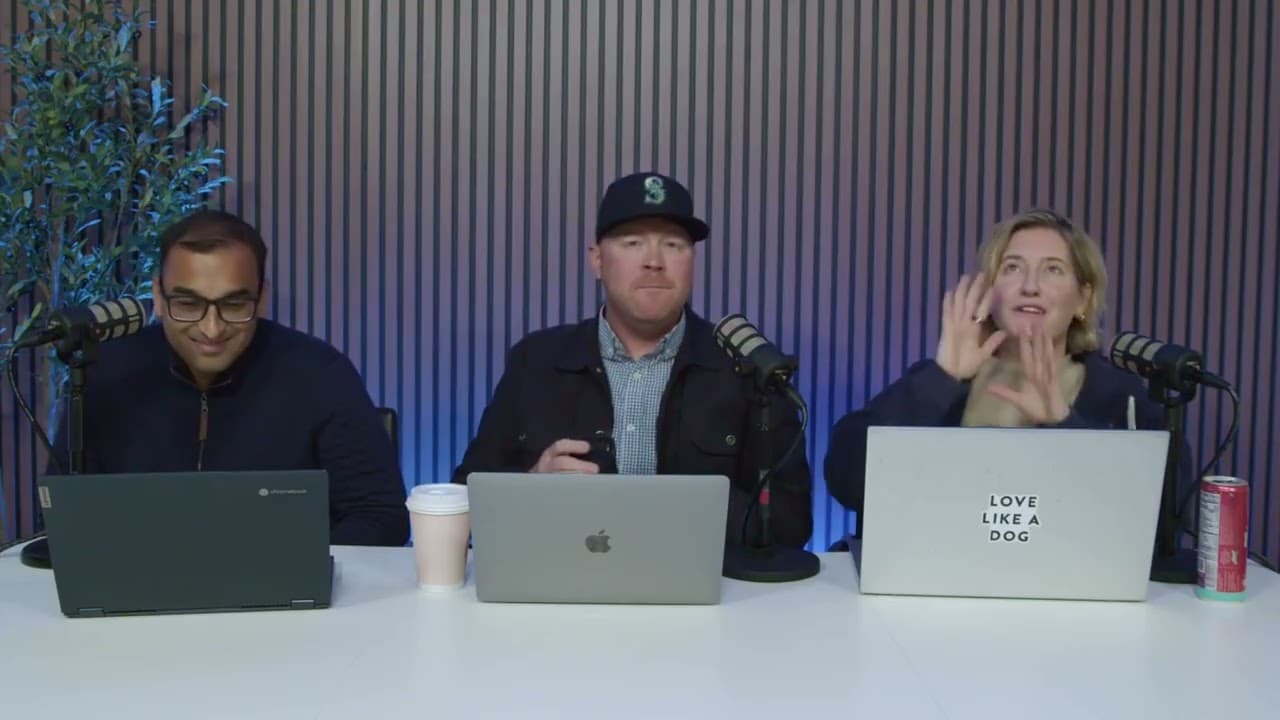
167: Start Here: Podcast Playlists for Buyers & Investors
Not sure where to start with Seattle real estate? In this episode of Awesome in Seattle, Christian Nossum, Joanna Beecher, and Varun Jain explain the education-first approach behind Awesome Nossum Group and share the official starter playlists we recommend for buyers and investors. We talk about why education comes before showings, offers, or strategy, how resources like Beers and Home Buying,…
· 20 min

market updates · Ep. 166
166: You Closed on Your House. Now What? A New Homeowner Checklist
You got the keys. Now what? In this episode of Awesome in Seattle, Christian Nossum and Joanna Beecher walk through the first things new homeowners should do after closing on a house. Buying a home is a huge milestone, but once the signing is done and the keys are in your hand, there are still important steps to take. We cover the practical post-closing checklist every buyer should know,…
· 14 min